
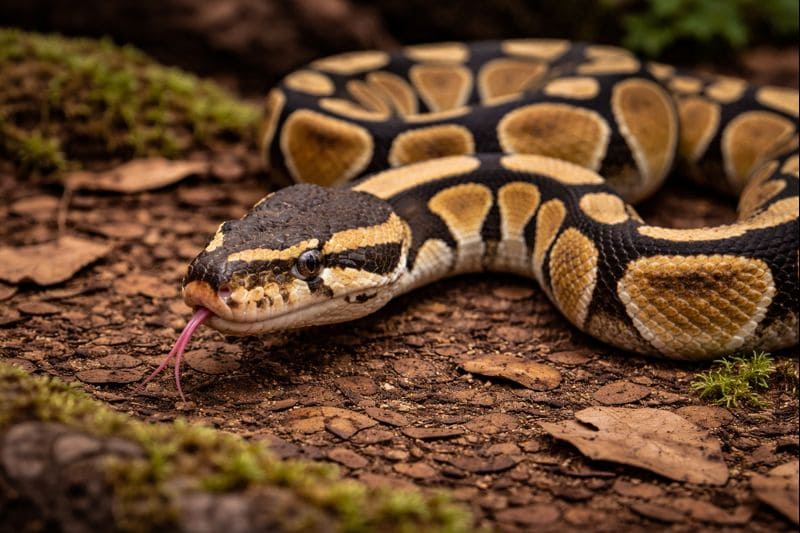
Few pet reptiles have earned a reputation as calmly as the ball python snake. With its steady temperament, manageable size, and mesmerizing patterns, it’s easy to see why this species is a favorite for both first-time keepers and long-time herp enthusiasts. Ball pythons are famous for curling into a tight “ball” when they feel unsure—an instinct that’s both endearing and a helpful clue about their comfort level. Like many reptiles, they thrive when their environment, routine, and handling are consistent. If you’re drawn to a snake that feels approachable, rewarding, and surprisingly expressive once it settles in, the ball python is a wonderful place to begin.
Meet the Ball Python: Temperament, Behavior, and Daily Rhythm
A healthy ball python is usually unhurried and observant, spending daylight hours tucked away and becoming more active in the evening. That classic defensive curl—often described as the “ball python ball”—is most common during the first days in a new home or after sudden changes, like moving enclosures or frequent handling. With time, most individuals learn that you’re not a threat and begin to explore more confidently.
Ball pythons aren’t “social” in the way mammals are, but they do recognize patterns: calm approaches, gentle support along the body, and predictable routines. Keep handling short at first, and avoid handling right after feeding. If your snake seems tense, hides constantly, or refuses meals, it’s often signaling that something about the setup or schedule needs adjusting.
Habitat Basics: Heat, Hides, Humidity, and Stress Reduction
Your enclosure should focus on security and stable temperatures. Provide at least two snug hides—one on the warm side and one on the cool side—so your python can thermoregulate without feeling exposed. A water bowl large enough for soaking is helpful, especially during shedding.
Ball pythons do best with a warm side and a cooler retreat, creating a gentle gradient. They also appreciate moderate humidity and good ventilation; too dry can lead to shedding issues, while too damp can cause skin troubles. Substrate choice matters less than cleanliness and comfort, but whatever you use should support humidity without staying swampy.
Clutter is your friend: branches, faux plants, and cork pieces give your snake “cover” and encourage natural exploration. Many feeding and stress problems come down to one simple issue—your snake doesn’t feel safe. A secure enclosure and consistent conditions go a long way toward building confidence.
Feeding and Growth: Consistency Over Complexity
Ball pythons are ambush predators with slow metabolisms. Most do well on appropriately sized rodents offered on a consistent schedule, adjusted for age and body condition. The goal is a snake that looks smoothly rounded—not sharply triangular or overly thick.
Some individuals go through seasonal appetite shifts, especially during cooler months or breeding season. While it can be nerve-wracking, a short fast doesn’t always mean something is wrong—especially if weight remains stable and the habitat is dialed in. That said, persistent refusal to eat paired with weight loss, wheezing, mouth bubbling, or unusual lethargy warrants a reptile-experienced veterinarian.
If you’re comparing different species for feeding reliability, it’s worth noting that a hognose snake can also be a charming pet, but many hognoses have their own quirky appetites and behaviors—making the ball python’s typically steady routine feel especially beginner-friendly by contrast.
Morphs and Color Variations: From “Green” to Banana
One of the biggest joys of keeping ball pythons is the variety of patterns and colors produced through selective breeding. You may hear people mention a “green ball python,” usually describing an olive or mossy tone that can appear under certain lighting or within specific pattern combinations. While true emerald green isn’t typical, the subtle earthy hues in some individuals can be striking.
Then there’s the ever-popular banana ball snake, known for warm yellow tones with lavender or purple accents that can deepen with age. You’ll also see the name banana royal python used interchangeably in many communities—since “royal python” is another common name for this same species. Morph names can be fun, but remember: the best snake is a healthy one from a responsible source, with clear feeding history and solid husbandry.
Handling, Enrichment, and Long-Term Care
Ball pythons can live for decades, so think long-term: stable equipment, regular enclosure checks, and a routine you can maintain. Handling should always feel supportive, never restrictive—let your snake move while you guide gently. Enrichment doesn’t need to be fancy; occasional rearranging of clutter, adding a new textured branch, or offering a larger exploration area (safely supervised) can encourage natural curiosity.
Over time, many keepers find their ball python develops a calm “presence”—a quiet animal that becomes more comfortable with the world when its needs are met consistently. If you enjoy slow, steady progress and the satisfaction of refined care, this species is deeply rewarding.