
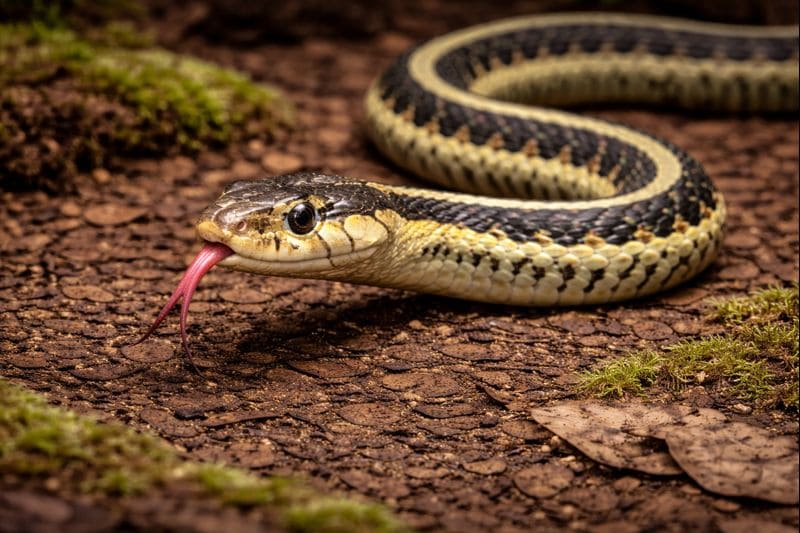
Garter snakes are some of the most familiar reptiles in North America, and they’re often the first snake people notice in a yard, park, or hiking trail. Slender, quick, and surprisingly curious, these snakes play an important role in local ecosystems by keeping pest populations in check. Although many folks lump them in with “common garden snakes,” garters are a diverse group with a wide range of colors, patterns, and behaviors. Once you know what to look for, it becomes easier to appreciate how adaptable they are—equally at home near ponds, in meadows, and along woodland edges. Let’s explore what makes garter snakes so successful, how to identify them, and how to share space with them safely.
What Makes a Garter Snake a Garter Snake?
Garter snakes belong to the genus Thamnophis, and they’re best known for their striped look—often a light stripe down the back with additional stripes along the sides. That said, patterns vary a lot: some individuals are boldly striped, others show checkerboard markings, and some have rich reds, greens, or blues mixed into the design. Their heads are usually small and not dramatically wider than their necks, giving them a gentle, streamlined profile.
You might hear people refer to garters as “grass snakes,” especially in casual conversation, because they’re frequently spotted slipping through tall grass. The nickname fits their habitat preferences, but it can also cause confusion since “grass snake” is used for different species in other parts of the world. In many U.S. regions, when someone says they saw a grass snake, they’re often talking about a garter.
One popular regional example is the eastern garter snake, which is widespread and adaptable. In many areas, “eastern garter” is a shorthand way people describe the same animal when they spot it in gardens, near woodpiles, or beside water.
Habitat, Diet, and Daily Life
If you want to find garter snakes, think “food + cover.” They like places where prey is abundant and hiding spots are close by—edges of ponds, damp meadows, creek banks, compost piles, rock borders, and even brushy corners of suburban lawns. They don’t need a huge wilderness area to thrive; they just need a safe route to move, hunt, and bask.
Their diet is one reason they’re so helpful to have around. Garter snakes commonly eat earthworms, slugs, leeches, amphibians, and small fish, depending on what’s available. This varied menu supports their ability to live in many habitats and to stay active through much of the warm season.
Behavior-wise, they’re generally shy and would rather flee than fight. If threatened, a garter snake may flatten its body to appear larger, musk (a strong-smelling defensive scent), or make quick strikes that are more about bluff than harm. Most people are surprised by how fast they can move—garters are built for quick bursts through vegetation.
Identification Tips and Common Misunderstandings
Because garter snakes can look different from one another, they’re sometimes mistaken for more dangerous snakes. A common mix-up involves brown snakes with a coppery tint. In some regions, people use phrases like “copperhead garter snake” when they see an individual with warm, reddish tones or bold side markings. While garters can certainly have coppery coloration, true copperheads have a distinctly broader, triangular head and a very different pattern. When in doubt, it’s best to keep a respectful distance and avoid handling any wild snake.
Another point of confusion is the label “common garden snakes.” Many harmless species end up with this nickname, including garter snakes, which are frequent visitors to yards thanks to the insects and worms attracted by watering and landscaping.
Garters also have an interesting seasonal rhythm. In colder climates, they brumate (a reptile version of dormancy) and may gather in communal dens. In spring, they emerge to bask, feed, and breed, which is why you might spot several individuals in the same general area early in the year.
Coexisting With Garter Snakes
Sharing space with garter snakes is usually simple. If you want fewer snake encounters, reduce hiding places right next to high-traffic areas by keeping tall grass trimmed and moving woodpiles away from doors and patios. If you’re happy to host them, consider leaving a wilder buffer zone near a fence line or garden edge, especially if you have a slug problem.
If you keep reptiles as pets, remember that wild garter snakes are not ideal “starter snakes.” They often arrive with parasites and stress easily. For indoor care, species designed for captivity are far better choices—just as a chameleon needs specialized lighting, humidity, and feeding routines that go beyond basic setups.
Conclusion
Garter snakes are quick, resourceful hunters that quietly benefit gardens and natural spaces by controlling pests and balancing local food webs. Whether you’re watching an eastern garter snake glide along a pond edge or noticing one of the many “common garden snakes” basking near a rock border, these reptiles are a reminder that wildlife can thrive close to home. With a little identification knowledge and a calm approach, most encounters become interesting moments rather than scary surprises—and you may even find yourself glad they’re around.