
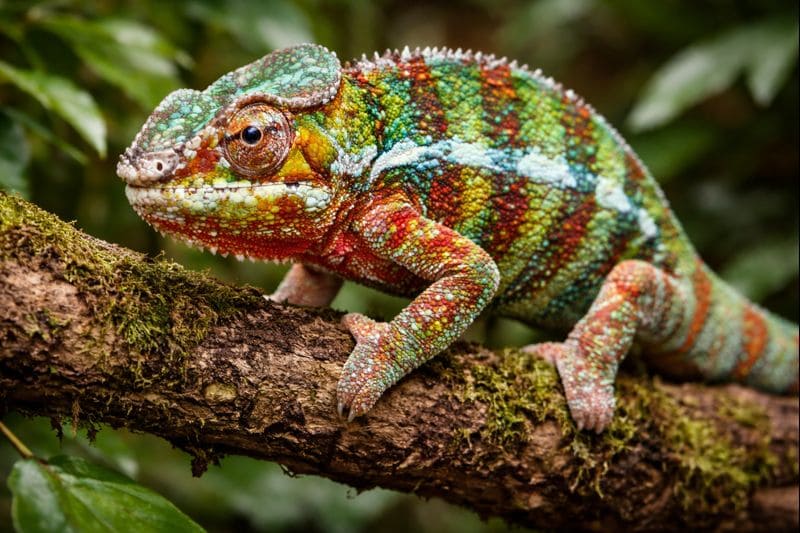
Chameleons are the quiet illusionists of the reptile world—slow, deliberate, and endlessly watchable. As a chameleon reptile, it’s designed for life above the ground, where branches sway and meals can appear in an instant. People often focus on color change, but the real story includes rotating eyes, a lightning-fast tongue, and a body built for gripping. Whether you’re simply fascinated by a chameleon lizard or you’re researching responsible care, understanding their needs turns “mysterious” into manageable.
Built for the Trees: Anatomy That Does the Work
A chameleon’s body is a collection of solutions to arboreal life. Its feet act like pincers, with toes arranged in opposing groups to clamp narrow perches. Add a prehensile tail—essentially a fifth limb—and you get an animal that can balance and pivot without risky leaps. The eyes are equally impressive: each can move independently, scanning almost all directions while the body stays still. When prey appears, both eyes align forward to judge distance, and the tongue launches with astonishing speed and accuracy.
Color change is real, but it’s not constant camouflage. Chameleons shift patterns and shades for communication, temperature control, and stress. Darker tones can help absorb warmth; lighter colors may reflect it. Brighter contrasts can signal confidence or a warning to back off. In other words, a chameleon’s palette is a language, not just a costume.
Famous Species: Panther, Veiled, and the “American Chameleon”
Different species have different temperaments and care demands, so it helps to know the names you’re seeing. The panther chameleon is celebrated for vivid coloration and striking regional variations. It can be a show-stopping display animal, but it still needs a tall, well-ventilated home, steady hydration, and a low-stress routine.
The veiled chameleon is another popular species, recognized by its tall casque (helmet-like crest). Many keepers find it hardy when the basics are correct, yet it can be more defensive than newcomers expect. That means gentle, predictable routines matter—slow movements, consistent lighting cycles, and plenty of visual cover.
You may also hear the phrase american chameleon. This nickname is often used for the green anole, which is not a true chameleon. Anoles can shift color too, but they don’t share the same eye mechanics or tongue design. If you’re planning a setup, confirming the exact species prevents mismatched lighting and temperature expectations.
Habitat Basics: Light, Airflow, Water, and Plants
Most chameleon problems begin with habitat shortcuts. Chameleons typically do best in tall enclosures that prioritize climbing space and airflow. Heat creates a basking zone, while UVB lighting supports healthy calcium use. Set up a gradient so your chameleon reptile can choose warmer or cooler areas throughout the day.
Hydration is just as important. Many chameleons prefer drinking from moving droplets, so misting and a dripper can mimic natural conditions. Live, non-toxic plants help hold humidity, offer drinking surfaces, and create privacy. A chameleon that feels exposed may show stress colors or stop eating, so leafy cover is more than decoration—it’s security.
Diet should be varied and intentional. Offer appropriately sized insects, gut-load them with nutritious foods, and supplement thoughtfully. Watch behavior and appetite; subtle changes often mean the enclosure’s temperature, hydration, or lighting needs adjustment.
Handling and Myth-Busting
Chameleons usually aren’t “holdable” pets. Frequent handling can cause stress, so think of them as observe-first companions. If you must move one, let it climb onto your hand rather than grabbing from above.
It also helps to separate fear from facts. People sometimes lump unfamiliar reptiles together—like comparing a calm chameleon lizard to a coral snake—simply because both look exotic. Chameleons aren’t venomous and aren’t built for confrontation; their strengths are patience, precision, and communication through color and posture.
Conclusion
A chameleon reptile is extraordinary not because it changes color, but because every part of it is tuned for a specific lifestyle. From the panther chameleon’s dazzling displays to the veiled chameleon’s bold personality—and the confusion created by the american chameleon nickname—these animals reward careful learning. Provide height, ventilation, heat, UVB, reliable hydration, and plenty of leafy cover, and you’ll see the real magic: a calm hunter living exactly as nature intended