
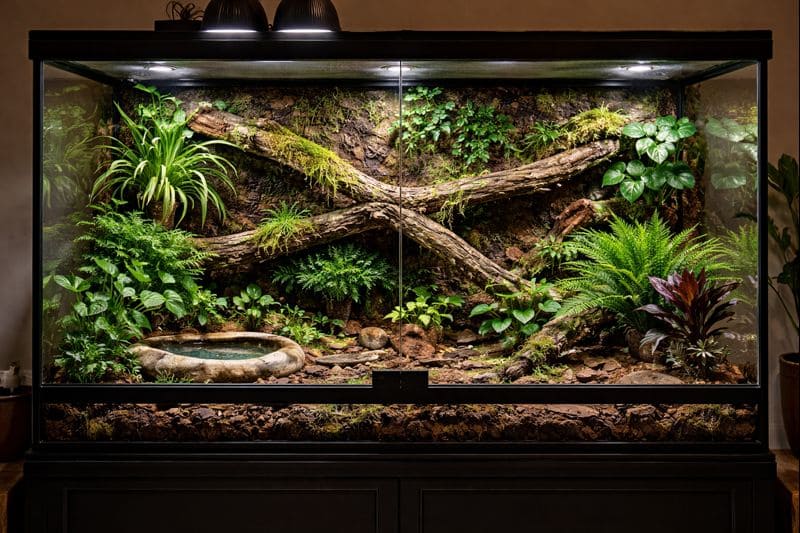
A vivarium is more than a tank—it’s a carefully designed micro-habitat that helps reptiles feel secure, behave naturally, and thrive. Whether you’re setting up your first snake enclosure or upgrading a long-time habitat, the goal is the same: stable heat, safe humidity, clean airflow, and enrichment that fits the species. Keepers often start with a simple glass setup and quickly discover that small details—like where the warm hide sits or how moisture is held in the substrate—make a big difference. From desert-style builds to lush forest layouts, the right vivarium supports health while making daily care easier. And once you get the basics right, you can tailor the environment for everything from docile snakes to active lizards.
Choosing the Right Enclosure Size and Style
Start by matching the habitat to the animal’s adult size and activity level. A long, low enclosure works well for many ground-dwellers, while more vertical space benefits climbers. If you’re planning an enclosure for bearded dragon, prioritize floor space, sturdy basking areas, and safe distances between heat sources and the animal. For many keepers, a front-opening design reduces stress during feeding and handling because you’re not coming from above like a predator.
When planning a snake enclosure, think in terms of security and temperature zones. Snakes often do best with two snug hides—one on the warm side and one on the cool side—so they can thermoregulate without feeling exposed. A cluttered, “busy” habitat with branches and foliage can actually calm an animal by offering visual cover.
Heat, Light, and the Role of a Reptile Heat Lamp
Heat is the engine of a reptile’s metabolism, so consistency matters. A reptile heat lamp can provide a strong basking spot for diurnal species, while other setups rely on heat panels or mats depending on the animal’s needs. No matter the method, always control heat with a thermostat and verify temperatures using reliable thermometers placed where the animal actually sits—inside hides and on basking surfaces, not just on the wall.
Create a gradient: one warm end, one cooler end, and a middle range. This lets your reptile choose comfort throughout the day. For many desert lizards, the basking zone is key; for many snakes, a steady warm hide is the priority. Lighting schedules also help establish a day-night rhythm, even for species that aren’t sun worshippers.
Substrate, Humidity, and Comfort
Substrate is more than decoration—it influences humidity, traction, cleanliness, and odor control. Choose a substrate that fits your animal and your maintenance routine. Some species need drier, sandier mixes; others benefit from moisture-holding materials. Provide multiple textures—smooth hides, rough bark, leaf litter, climbing branches—so the animal can explore and shed properly.
Ventilation is the quiet hero. Too little airflow can trap stale moisture; too much can dry the enclosure fast. If you’re struggling to maintain the right balance, adjust ventilation coverage, add moisture-retaining layers, or modify the water bowl size and placement rather than soaking everything daily.
Designing a Bearded Dragon Vivarium That Works
A bearded dragon vivarium is often a keeper’s first “full build,” and it’s a great example of how function and aesthetics can meet. Include a solid basking platform with a secure ramp or branch, and arrange décor so the dragon can choose open lounging spots or shaded retreats. Keep climbing pieces stable—no wobbly piles. Add enrichment like textured rocks, sturdy logs, and a digging area if your dragon enjoys it.
Aim for a layout that’s easy to clean: removable décor, accessible corners, and a feeding area that won’t get buried under substrate. When the habitat is practical, you’ll keep it cleaner—and the animal benefits every day.
Daily Care, Cleaning, and Upgrades Over Time
A thriving vivarium depends on consistent routine. Spot-clean waste, replace soiled substrate as needed, wash water bowls frequently, and check equipment daily. Heat elements and bulbs wear out, thermostats can drift, and probes can move—so treat quick checks like part of feeding time.
As you gain experience, you can upgrade hides, refine the gradient, or redesign the layout to match behavior you’re seeing. If your reptile hugs the cool side constantly, the warm end might be too hot. If it spends all day in one hide, it may need more cover elsewhere.
And if you’re thinking ahead to other reptiles, consider how different species use space. Many skinks, for example, love ground clutter, burrow-friendly substrate, and tight, secure hiding places—details that can inspire a more natural, confidence-building approach to any vivarium.
Conclusion
Vivariums succeed when they’re built around the animal’s needs: the right temperature gradient, reliable heat control, species-appropriate humidity, and a layout that offers both security and choice. Whether you’re assembling an enclosure for bearded dragon, refining a bearded dragon vivarium, or setting up a snake enclosure with perfect hides, focus on stability first and style second—then blend them together. With a thoughtfully placed reptile heat lamp, smart ventilation, and an easy-to-clean design, your vivarium becomes a living space that supports health and natural behavior. Over time, small adjustments based on observation will turn a good setup into a great one.