
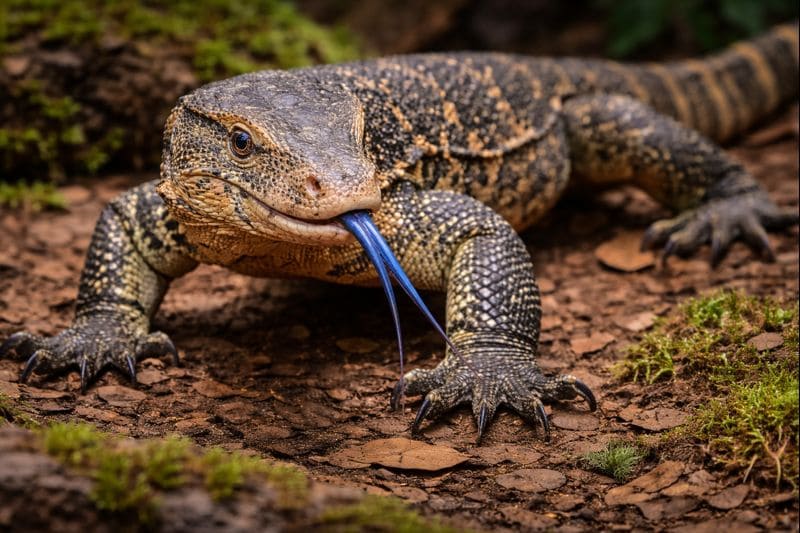
Monitor lizards are some of the most fascinating reptiles on Earth—powerful, intelligent, and built for exploration. Found across Africa, Asia, and Australia, these animals range from compact ground hunters to massive apex predators that can dominate entire ecosystems. What sets them apart isn’t just their size or strength, but their awareness: many monitor lizards actively investigate their surroundings, use their tongues to “taste” the air, and solve problems in ways that surprise even experienced reptile keepers. Whether you’re drawn to their wild natural history or simply curious about what makes them tick, understanding monitor lizards starts with the basics—where they live, how they hunt, and what they truly need to thrive in captivity.
What Makes a Monitor a Monitor?
Biologically, monitor lizards belong to the genus varanus, a group defined by athletic bodies, strong limbs, sharp claws, and a long neck that gives them a distinct, alert posture. They’re known for active lifestyles: many patrol territories, climb, swim, dig, or do all three depending on the habitat. Their forked tongues and keen senses help them track prey, locate carrion, and navigate complex environments.
Because of this variety, it helps to think in terms of “types” rather than a single stereotype. Some are semi-aquatic, some are desert dwellers, and others are arboreal climbers. Even within the same region, different monitor species can fill different ecological roles—one may hunt insects and small rodents, while another targets fish, birds, or reptiles. This diversity also affects temperament and care, which is why choosing a monitor based solely on looks can lead to trouble.
Monitor Dragons, Power, and Predator Style
People sometimes call these reptiles monitor dragons, and the nickname makes sense once you see how they move. Many have a confident, almost “mythic” presence—head held high, tail steady, eyes scanning. They’re opportunistic carnivores, and their hunting style depends on the species. Some rely on speed and ambush, others on persistence and strength. Most are eager feeders, but that doesn’t mean they should be overfed; obesity is a common issue in captivity when activity and diet don’t match.
Their intelligence is another reason they’re both rewarding and challenging. Monitors can learn routines quickly, recognize patterns, and test boundaries. That means enrichment isn’t optional—it’s a requirement. Hides, climbing structures, digging areas, and varied feeding strategies can reduce stress and improve overall health. A bored monitor is more likely to become defensive, restless, or destructive.
Spotlight: The Bosc Monitor in Real Life
The bosc monitor (often recognized as a sturdy, ground-focused monitor) is a great example of how specific needs shape a species’ success. Many people are attracted to it because it looks like a “classic monitor” in a manageable size range, but it still requires serious planning. This species thrives with deep substrate for digging, strong heat gradients, and consistent hydration options—even in drier setups. Digging behavior isn’t just a fun extra; it’s part of how many monitors feel secure and regulate their body temperature.
Diet matters too. A healthy approach focuses on leaner whole-prey choices and appropriate portions, rather than relying on frequent fatty treats. Because monitors are enthusiastic eaters, it’s easy to mistake begging for hunger. Observing body condition over time—tail base thickness, overall muscle tone, and activity level—gives a better picture than appetite alone.
Habitat, Handling, and Responsible Keeping
Monitor lizards aren’t “decorative” pets. They are high-energy reptiles with strong instincts and physical power. Enclosures must be large enough to allow natural movement: climbing, digging, and exploring. A proper thermal gradient with a hot basking zone is non-negotiable, and humidity should reflect the species’ natural environment. Many monitors benefit from access to water for soaking, even if they don’t live in wetlands.
Handling should be thoughtful and minimal at first. Trust is built through calm routines—predictable feeding, gentle movements, and giving the animal control over interactions. Some monitors become surprisingly tolerant, even curious, but others remain more defensive. The goal isn’t to “tame” a wild animal into submission; it’s to create a stable environment where stress stays low.
If your interests lean toward smaller, more hands-off reptiles, you might also enjoy species like the crested gecko, which often fits a different lifestyle of care and space while still offering an engaging reptile experience. Comparing needs can help you choose an animal that matches your home, budget, and time.
Why Monitor Lizards Inspire Awe
From deserts to forests to riversides, monitor lizards prove that reptiles can be dynamic, curious, and complex. Understanding the genus varanus means appreciating how varied these animals are—and how much their care depends on respecting that variety. Whether you’re learning for fun or preparing to keep one someday, monitor lizards are best approached with patience, research, and admiration. When their environment is right and their needs are met, these remarkable reptiles don’t just survive—they thrive in ways that make every observation feel like a front-row seat to living natural history.