
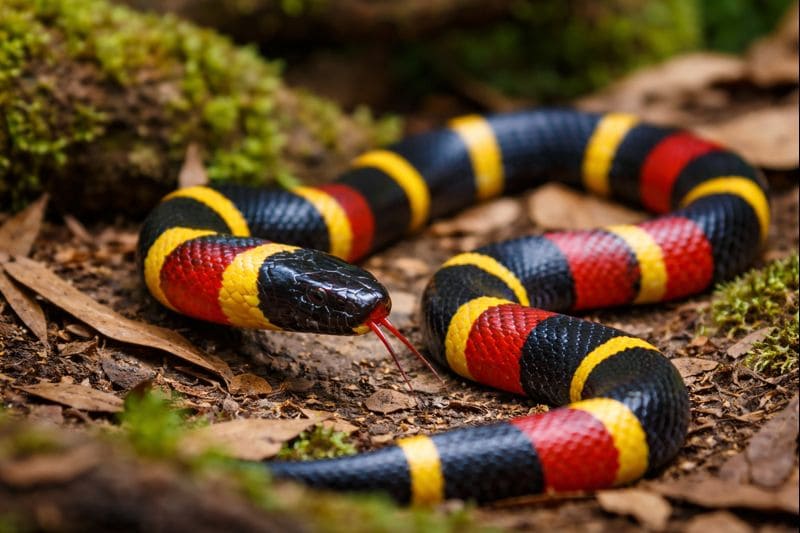
Coral snakes are among the most striking reptiles in the Americas, famous for their bold bands of red, yellow (or white), and black. Yet despite their vivid colors, these snakes are often shy, hidden, and rarely seen. Their reputation tends to travel faster than the animal itself, which is why learning the basics—how they live, what they eat, and how to stay safe around them—matters. Understanding coral snakes doesn’t mean fearing every striped snake you spot; it means knowing that nature uses color as a warning, camouflage, and sometimes even a clever disguise. When you know what you’re looking at, you can admire these beautiful reptiles from a safe distance and appreciate the role they play in healthy ecosystems.
What Coral Snakes Are (and Why They Look Like That)
Coral snakes belong to a group of venomous snakes with distinctive ringed patterns that act as a warning signal to potential predators. Their coloration is a classic example of “aposematism,” where bright colors advertise danger. The twist is that several harmless species mimic that same banded look, hoping predators will avoid them, too. This mimicry is one reason identification can be tricky in the wild.
These snakes are typically slender with a small, rounded head and smooth, glossy scales. Their movements can be surprisingly quiet and deliberate, and they often prefer staying out of sight under leaf litter, logs, or loose soil. Depending on the region, different species of coral snakes may have slightly different band arrangements or shades, but the overall impression is still unmistakable: a living ribbon of color moving through the undergrowth.
Habitat, Behavior, and the Secretive “Underground” Lifestyle
If you feel like you never see coral snakes, you’re not imagining it. Many coral snakes are secretive by nature and spend a lot of time hidden. They’re commonly associated with forest edges, scrub, sandy areas, and places with plenty of cover such as fallen branches and thick ground debris. Some are also found near yards that border natural habitat, especially where there’s leaf litter and places to burrow.
Coral snakes tend to be most active at times when temperatures are moderate—often early morning, evening, or after rainfall—though this varies by location. Instead of chasing prey openly, they often rely on stealth and tight spaces. That hidden lifestyle also helps explain why encounters are uncommon: coral snakes generally avoid conflict and would rather slip away than stand their ground.
Diet, Predators, and Their Role in the Ecosystem
Coral snakes help keep local ecosystems balanced by feeding on small reptiles and other animals they can overpower in confined spaces. Their diet often includes small lizards and sometimes other snakes. Because they’re not large, they target prey that fits their size and hunting style. This makes them part of a natural “cleanup crew” that helps regulate populations of smaller animals.
They also have predators—especially animals that have learned to avoid the warning colors or that are less affected by venom. Even so, their bright pattern is an important layer of protection. Nature is full of “cost-benefit” strategies, and coral snakes invest heavily in a clear visual message: don’t mess with me.
It’s also worth noting that people sometimes confuse coral snakes with harmless look-alikes, or even with helpful backyard visitors like the king snake. A king snake is nonvenomous and famously preys on other snakes, making it an ally in many environments. Learning the difference between these species helps protect you and prevents needless harm to beneficial reptiles.
Safety, Identification, and What to Do If You See One
The safest approach is simple: never handle a wild snake. If you see coral snakes, give them space and let them move along. Most bites happen when someone tries to pick up, kill, or “relocate” a snake without proper training and tools.
Because banded patterns can be confusing, it’s best not to rely on quick rhymes or shortcuts. Instead, focus on overall caution: any unknown snake deserves respectful distance. Wear closed-toe shoes when walking in brushy areas, use a flashlight at night, and watch where you place your hands—especially around logs, rocks, or thick leaf litter. If you have pets, keep them leashed in snake-prone habitats and avoid letting them investigate holes or woodpiles.
If a bite ever occurs, treat it as a medical emergency. Seek immediate professional care, limit movement, and avoid “home remedies” like cutting, sucking, or tourniquets. Quick, calm action saves lives.
Conclusion
Coral snakes are a powerful reminder that beauty and danger can share the same pattern. They’re not out looking for trouble; they’re quiet, secretive reptiles with an important job in their ecosystems. By learning how coral snakes live and why they’re so often misidentified, you can replace panic with practical respect. The best rule is also the easiest: admire from a distance, don’t handle wild snakes, and let them pass. When you do that, you protect yourself, your pets, and the delicate balance these remarkable reptiles help maintain.